ERP and planning signals
Forecasts, order books, inventory positions, material plans, production plans, supplier commits, and part-level context.
Supply Chain AI Integrations
SupplyWhy works alongside the systems automotive teams already rely on so planning signals can become prioritized exceptions, decision traces, and response workflows.
Integration Posture
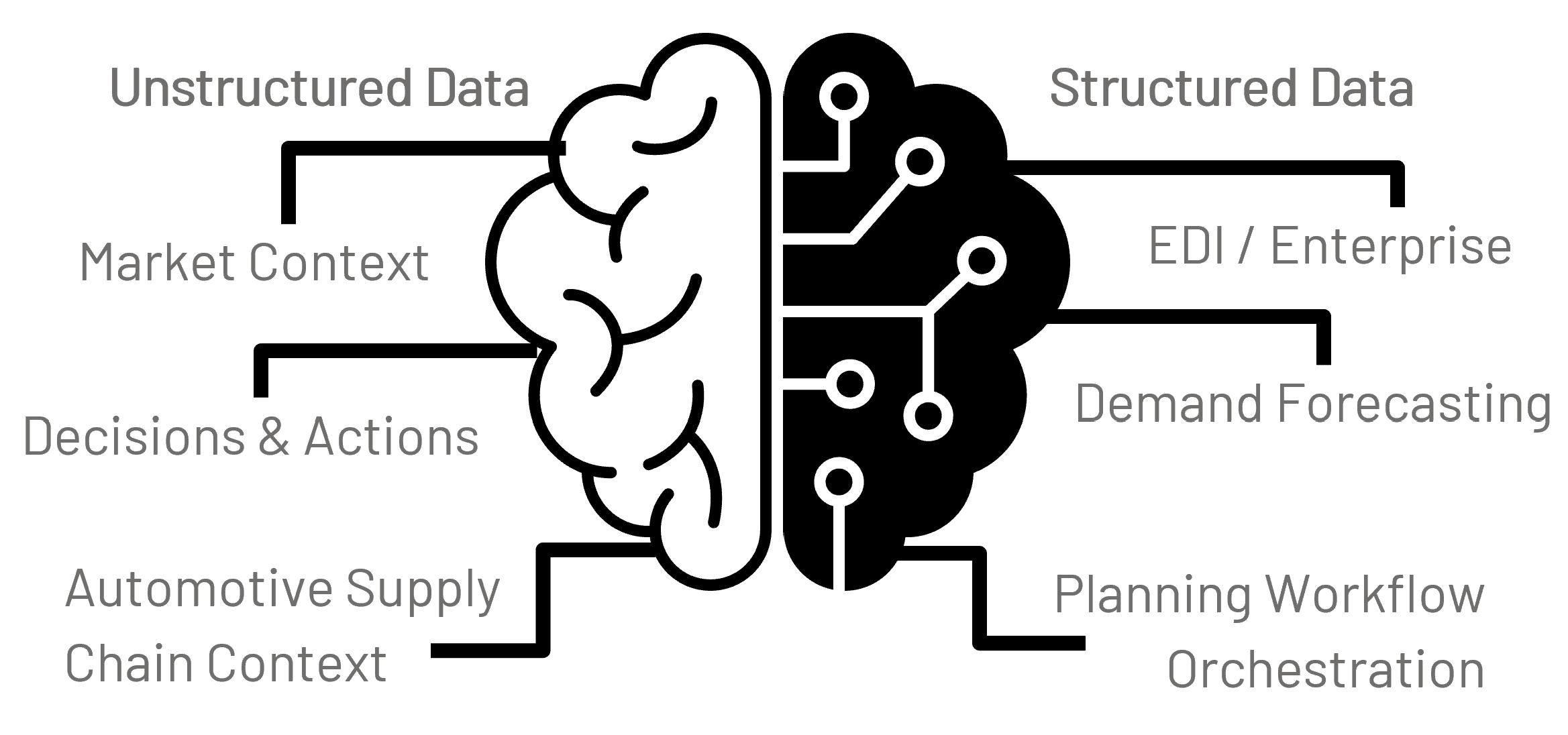
SupplyWhy is built as an intelligence and response layer for automotive supply chain teams. Integration scope depends on each customer environment, available data, and implementation plan. Named systems below describe common enterprise environments teams ask about, not certified marketplace integrations.
Planning, demand, inventory, supplier, finance, and file-based signals
Agentic workflows map changes to automotive context and impact
Teams get prioritized exceptions and traceable response paths
Inputs
Forecasts, order books, inventory positions, material plans, production plans, supplier commits, and part-level context.
Customer demand changes, release schedules, program context, forecast variance, and planning exceptions.
CSV extracts, spreadsheets, planning workbooks, exception trackers, and supporting commercial or finance context.
Data warehouses, databases, APIs, and structured data pipelines that already support enterprise planning operations.
Common Environments
Automotive teams rarely operate from one clean system. SupplyWhy is designed for environments where ERP, EDI, planning tools, data platforms, and spreadsheets all carry part of the truth.
Workflow
SupplyWhy is designed to work alongside existing systems rather than force a full planning-system replacement.
Signals are mapped to automotive context such as part, program, customer, supplier, lead time, inventory, and financial exposure.
JENAE coordinates specialized agents for demand, inventory, supplier risk, financial recovery, and decision traceability.
Teams receive prioritized exceptions, recommended response paths, and the evidence behind each decision.
Outputs
Prioritized planning exceptions
OEM forecast reconciliation outputs
Inventory exposure and shortage risk
Supplier constraint and lead-time context
Scenario and tariff response recommendations
Claim recovery and margin exposure evidence
Decision traces for planning, finance, and customer teams
Human-reviewable response workflows
Trust and Governance
Recommendations are linked back to source signals, assumptions, and affected planning context so teams can inspect the reasoning.
SupplyWhy is designed to support planners, finance teams, and customer teams with reviewable actions, not opaque automation.
The right integration path depends on available systems, data quality, customer security requirements, and the workflows being deployed first.
Related Workflows
Use integrations to support Tier 1 planning workflows across demand, supplier, inventory, and finance context.
Learn moreConnect EDI, ERP, forecast, inventory, and supplier signals to reconcile customer demand changes.
Learn moreTurn integrated signals into a prioritized exception queue for planning and finance review.
Learn moreBring the systems, files, and workflows your team uses today. SupplyWhy can help identify which signals should connect first.
Contact Us